

In Colorado, there is no separate criminal charge called “battery.” What many people refer to as battery is legally prosecuted as assault under Colorado law. If you are facing Denver assault charges or elsewhere in Colorado, the severity of the charge depends on the required mental state, the level of injury, and whether a weapon was involved.
Introduction
Being accused of a violent offense can feel immediate and overwhelming. Many people arrested after a fight, argument, or physical confrontation ask the same question: Am I charged with assault or battery? In some states, assault and battery are separate crimes. Under Colorado assault law, however, physical injury offenses are consolidated into different degrees of assault. The classification (misdemeanor or felony) turns on specific statutory elements, not just what happened during the incident.
Small factual distinctions matter. The difference between minor physical pain and a fracture, or between reckless behavior and intentional conduct, can significantly change the level of exposure. This article explains how Colorado defines assault, how it differs from related offenses like menacing and harassment, and the potential penalties involved.
Understanding the Charge Under Colorado Law
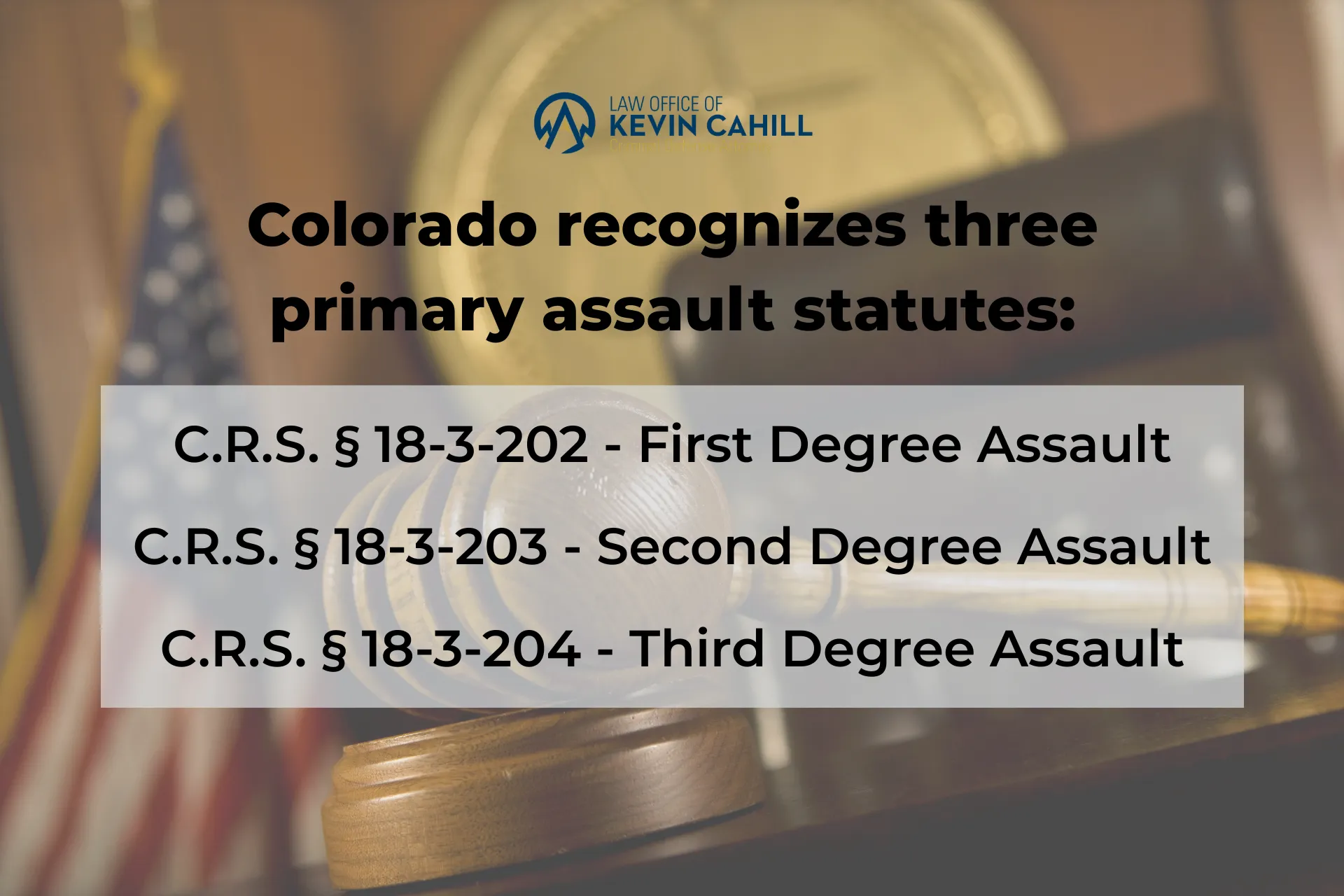
Colorado recognizes three primary assault statutes:
- C.R.S. § 18-3-202 – First Degree Assault
- C.R.S. § 18-3-203 – Second Degree Assault
- C.R.S. § 18-3-204 – Third Degree Assault
Unlike other states, Colorado does not separate “battery” into its own offense. Conduct that involves unlawful physical injury is charged within this assault framework.
The following three factors determine how a case is classified: mental state (intentional, knowing, reckless, or criminal negligence), severity of injury, and use of a deadly weapon or other aggravating circumstances Each element must be proven beyond a reasonable doubt.
Third Degree Assault
Third degree assault is generally the least serious level, but it remains a criminal offense with lasting consequences. A person commits third degree assault if they: knowingly or recklessly cause bodily injury to another person; or, with criminal negligence, cause bodily injury by means of a deadly weapon. Third degree assault is typically charged as a misdemeanor, though the presence of a domestic violence enhancer can significantly increase the long-term consequences.
What Is “Bodily Injury”?
Colorado defines bodily injury broadly as: Physical pain, illness, or any impairment of physical or mental condition. Visible injuries are not required. Even relatively minor physical pain may qualify under the statute.
Second Degree Assault
Second degree assault is generally a felony offense and involves more serious conduct or circumstances. This charge may apply if a person:
- Intentionally causes bodily injury using a deadly weapon
- Intends to cause serious bodily injury and causes bodily injury
- Causes injury to certain protected professionals (such as peace officers or medical providers)
- Uses force to prevent a public servant from performing official duties
Serious Bodily Injury Defined
Under Colorado law, serious bodily injury includes injuries involving: a substantial risk of death, serious permanent disfigurement, protracted loss or impairment of a body part or organ, and/or breaks or fractures. The distinction between bodily injury and serious bodily injury often becomes a central issue in assault defense cases. Medical records, expert testimony, and statutory interpretation can all play a role.
First Degree Assault
First degree assault is the most serious assault offense in Colorado and is charged as a felony. It generally applies when someone:
- Intends to cause serious bodily injury and actually causes serious bodily injury
- Acts with extreme indifference to human life and causes serious injury
- Commits assault during certain serious underlying felonies
Because of the required mental state and injury level, first degree assault cases frequently involve complex factual and forensic analysis.
Crimes of Violence Enhancements
Some felony assault charges may be designated as a crime of violence under C.R.S. § 18-1.3-406. This enhancement may apply if: a deadly weapon was used or threatened; or the defendant caused serious bodily injury or death. When charged as a crime of violence, sentencing exposure can increase substantially and may involve mandatory incarceration. Whether the enhancement applies depends on how the prosecution charges the case and the specific evidence involved.
Menacing vs. Assault
A common point of confusion is the difference between menacing and assault. Under C.R.S. § 18-3-206, menacing occurs when a person knowingly places or attempts to place another person in fear of imminent serious bodily injury. The key distinction is that menacing does not require actual injury, and assault does require bodily injury.
If a weapon is involved in a menacing case, the charge may be elevated to a felony. Without a weapon, it is typically a misdemeanor. In situations where no physical injury occurred but someone claims they were threatened, prosecutors might file menacing rather than assault charges.
Harassment vs. Assault
Harassment, defined under C.R.S. § 18-9-111, is generally a misdemeanor offense. It may involve: striking, shoving, kicking, or offensive physical contact; repeated communications intended to harass or alarm; and/or conduct meant to annoy or provoke. The primary difference between harassment vs assault is the presence of bodily injury. If there was physical contact but insufficient evidence of pain or impairment, a case could be filed as harassment instead of third degree assault.
Potential Penalties & Consequences
Penalties depend on the degree of assault, criminal history, and whether enhancements apply. Because sentencing laws can change, the specific range depends on how the charge is classified at filing and disposition. For Misdemeanor Assault (e.g., Third Degree), potential consequences may include:
- County jail exposure
- Fines
- Probation
- Court-ordered classes or treatment
For Felony Assault (First or Second Degree), potential consequences could include:
- Department of Corrections prison sentence
- Extended probation
- Significant fines
- Parole supervision
If charged as a crime of violence, sentencing might require incarceration rather than probation.
Additional Consequences
Beyond incarceration, assault charges in Denver can create collateral effects, such as:
- Mandatory Protection Orders:In most violent cases (especially those involving domestic violence) the court enters a criminal protection order prohibiting contact with the alleged victim, and violating that order is a separate criminal offense.
- Firearm Restrictions: Felony assault charges and domestic violence findings can lead to firearm possession prohibitions during the case and potentially long term.
- Employment and Professional Licensing: An assault conviction may appear on background checks and affect professional credentials, security clearances, and employment opportunities.
- Immigration Impact: Certain assault convictions may carry immigration consequences, including possible removal proceedings. Non-citizens should consult qualified legal counsel promptly.
Frequently Asked Questions
Will a protection order automatically be issued?
In most assault cases involving alleged violence against another person, the court issues a mandatory criminal protection order at the first appearance. It remains in place throughout the case unless modified by the court.
Can assault charges be reduced to harassment?
In some cases, yes. If evidence of bodily injury is weak or disputed, negotiations may result in a reduction to harassment. Outcomes depend on the strength of the evidence and the specific circumstances.
What does “reckless” mean under Colorado assault law?
Reckless conduct means consciously disregarding a substantial and unjustifiable risk that injury could occur. It does not require intent to cause harm, but it requires awareness of the risk.
Will I go to jail for a first assault charge?
It depends on the degree of assault, criminal history, and the facts involved. Some misdemeanor cases result in probation, while felony cases may carry prison exposure. Early legal representation can influence how a case develops.
Final Thoughts
If you are researching “assault vs battery,” the critical point is that Colorado does not charge battery separately. Physical injury offenses are prosecuted under the state’s assault statutes, with severity determined by mental state, injury level, and aggravating factors such as weapon use. Violent crime allegations are serious, but they are also highly fact-specific. The difference between harassment, third degree assault, and felony assault often turns on technical statutory definitions and evidentiary detail.
Early legal guidance is essential. Protection orders, bond conditions, and charging decisions can affect daily life long before a case reaches resolution. If you are facing assault charges in Denver or elsewhere in Colorado, the defense team at Cahill Criminal Defense focuses on protecting individuals accused of violent offenses and can provide confidential guidance tailored to your situation.