
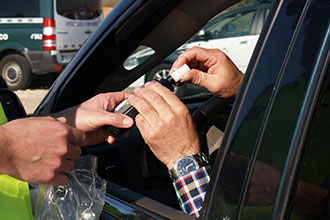
Being asked to take a breathalyzer test during a Colorado DUI investigation can feel stressful, especially when you’re unsure what refusal means for your license or your case. The answer to this question varies, but there are a few vital deciding factors in it all. In other words, whether or not you can refuse to take a breathalyzer test in Colorado depends on the situation. That being said, there’s more to consider: even if you can refuse a breathalyzer test, should you? This article explains what might happen if refusal issues arise, what could happen after a refusal, and why acting quickly is of the utmost importance if you receive an Express Consent notice.
Can I Refuse a Breathalyzer Test?
So, can you refuse a breathalyzer test? The answer usually comes down to this: if you haven’t been arrested, you can refuse without penalty. If you’ve already been arrested, you cannot legally refuse. The point of the test is to establish probable cause to arrest you for driving under the influence (DUI).
Under Colorado’s Express Consent law (C.R.S § 42-4-1301.1), drivers are generally deemed to have consented to chemical testing after a lawful DUI arrest, and refusing a breath or blood test can trigger serious DMV consequences separate from any criminal charge.1 However, refusing a breathalyzer in the field (a field sobriety test) is much different than refusing a breathalyzer at a police station after being arrested. Under Express Consent law, if you are 21 years or older, you can refuse field sobriety testing and the field breathalyzer test without penalty.1 Neither the results of the tests (if you choose to take them) nor your refusal can be used against you in court.
Refusing Field Sobriety Tests
In Colorado, field sobriety tests are voluntary, and refusing them can help avoid creating additional evidence for the officer to use in deciding whether to arrest you or for prosecutors to use later in court. These roadside tests are often subjective, affected by nerves, medical conditions, fatigue, uneven pavement, poor weather, or unclear instructions, not just alcohol or drug impairment. Per the State of Colorado Impaired Driving Enforcement Manual (2025), a driver can politely decline by saying, “Officer, I respectfully decline to perform voluntary roadside tests,” while remembering that this is different from refusing a post-arrest breath or blood test under Colorado’s Express Consent law, which can carry serious DMV consequences.4
However, it’s important to note that refusing the tests doesn’t mean the officer can’t arrest you. The officer’s observations may be enough to establish probable cause, especially if they notice any of the following:
- Bloodshot eyes
- The smell of alcohol on someone’s breath
- Slurred speech
- An admission of drinking or being drunk
In most cases, if you haven’t already been arrested, it’s best to refuse the field sobriety test. However, it’s important to always remain polite. Belligerence is a common indicator of intoxication, so if you’re excessively rude, loud, or hostile, the officer might arrest you on the spot.
It’s likely in your best interest to refuse a field sobriety test because the results tend to hurt most cases, not help them. The only possible advantage to agreeing is that if your blood alcohol content (BAC) is well below the legal limit, in which case the officer will likely let you go. However, if you’re under 21 years of age, the laws are a little different. If the police officer has a reasonable suspicion that you have consumed alcohol, they can legally require you to take a field breathalyzer test under Express Consent laws.1
What Are My Rights if I’ve Already Been Arrested?
If you have been arrested for a DUI, you no longer have the right to refuse any testing, including a breathalyzer. This is because Colorado’s Express Consent law views driving as a privilege, not a right, that can be taken away as soon as you are arrested for driving under the influence.1 Using the privilege of driving implies that you also give your implied consent, as per Colorado’s definition of consent, to undergo testing following an arrest. Once you have officially been arrested, no test can be refused, and their results can be used against you in court. If you do refuse a breathalyzer or any test after you have been arrested for a DUI, the consequences are extremely severe:3
- Automatic license revocation:
- Your license will be suspended for a year (you can apply for reinstatement after two months).
- DUI treatment enrollment:
- You’ll be required to participate in a drug and alcohol education and treatment program.
- Ignition interlock device requirement:
- You must install an ignition interlock on your car for two years (once driving privileges are reinstated).
- Identification as a Persistent Drunk Driver:
- You’ll be designated a “persistent drunk driver,” even if it’s your first arrest.
- SR22 insurance:
- Even if you aren’t convicted, you may be required to carry SR-22 insurance: a certificate of financial responsibility required for high-risk drivers to prove they have the minimum auto insurance coverage mandated by the state.2
Ultimately, refusing a test after arrest is not only illegal, it’s very unwise. You might not want to take the test because you’re afraid a high BAC will hurt your case, but in almost every instance, refusing the test will only make things worse. You’ll likely suffer the consequences of a post-arrest refusal on top of the consequences of a DUI conviction. It’s not worth it!
Never Refuse Excellent Legal Representation
In Colorado, a DUI conviction can impact your finances, reputation, career, family, and relationships, even long after the conviction itself. You should always secure an experienced DUI lawyer to defend you. Even if you’re certain you’re guilty, a skilled lawyer may be able to get a better outcome than you expected.
If you’ve been arrested for DUI, the time to secure an attorney is right now. Don’t hesitate: call the Law Office of Kevin Cahill at 720-445-9887 or contact us online today.
References
1. Colo. Rev. Stat. § 42-4-1301.1. https://colorado.public.law/statutes/crs_42-4-1301.1
2. Colorado Department of Revenue, Division of Motor Vehicles. (n.d.). SR-22 and insurance information. https://dmv.colorado.gov/sr-22-and-insurance-information
3. Colorado Department of Transportation. (2025, May 15). Over half of drivers refuse to be tested upon arrest for a DUI. https://www.codot.gov/news/2025/may/over-half-of-drivers-refuse-to-be-tested-for-dui
4. Colorado Department of Transportation, Highway Safety Office. (2025, April). Impaired driving enforcement manual for the State of Colorado. https://www.codot.gov/safety/dre/assets/alcoholdrugimpaireddrivermanual.pdf